The FORZA 2026 World Cup Grassroots Report
The summer football season is set to be one of the biggest in recent memory, with the 2026 World Cup taking place across the United States, Canada and Mexico. One of the world’s most popular sporting events, it brings nations, families and friends together, motivating and inspiring many to get involved, watch and play.
However, there are concerns that have been raised by grassroots clubs in the UK that suggest this year’s tournament might be missed by many.
This is based on the 250 responses we received in our World Cup Grassroots Survey, the findings include:
Key findings
- Respondents first remember watching a World Cup tournament at an average age of 10 years old.
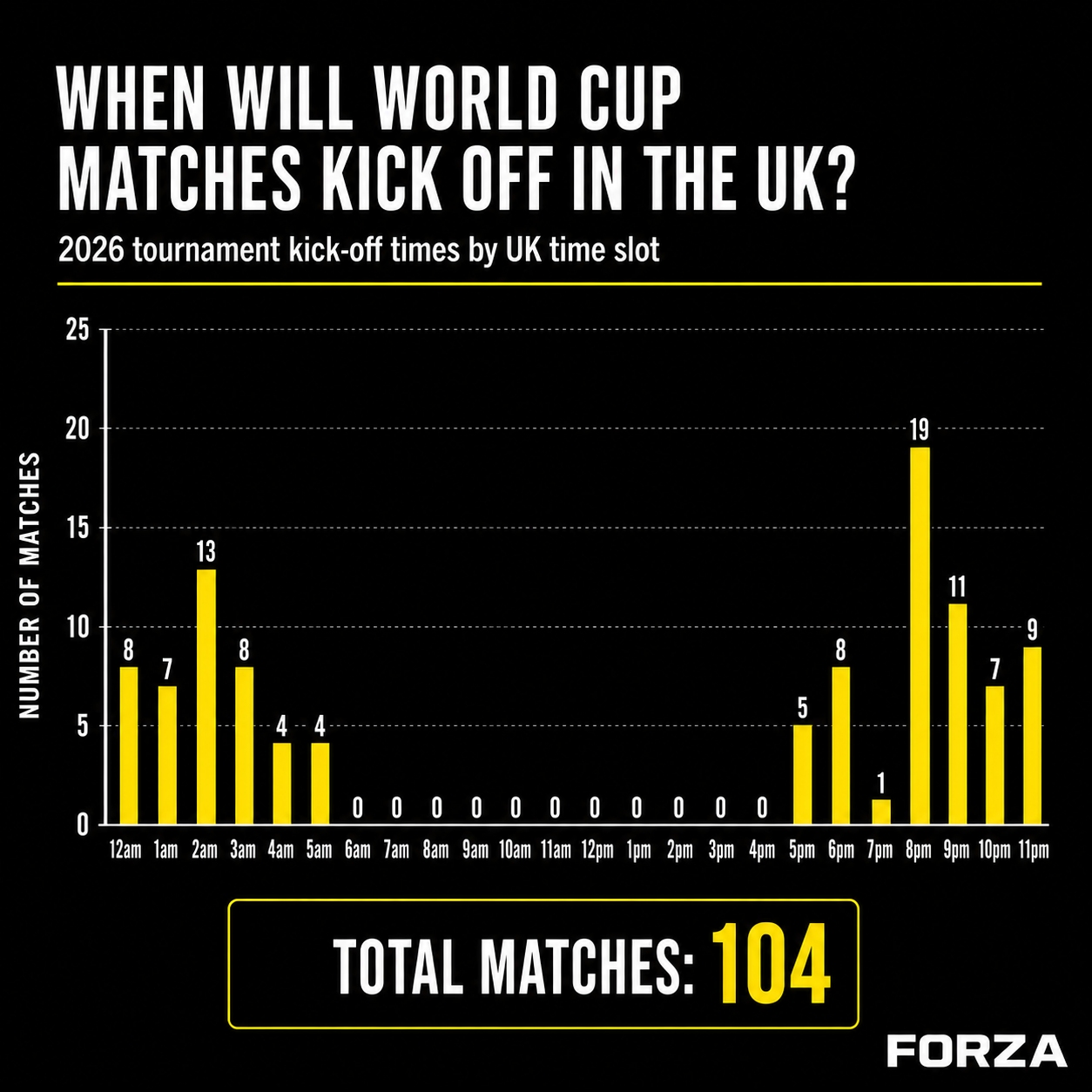
- 68% of matches kick off between 9pm and 5am.
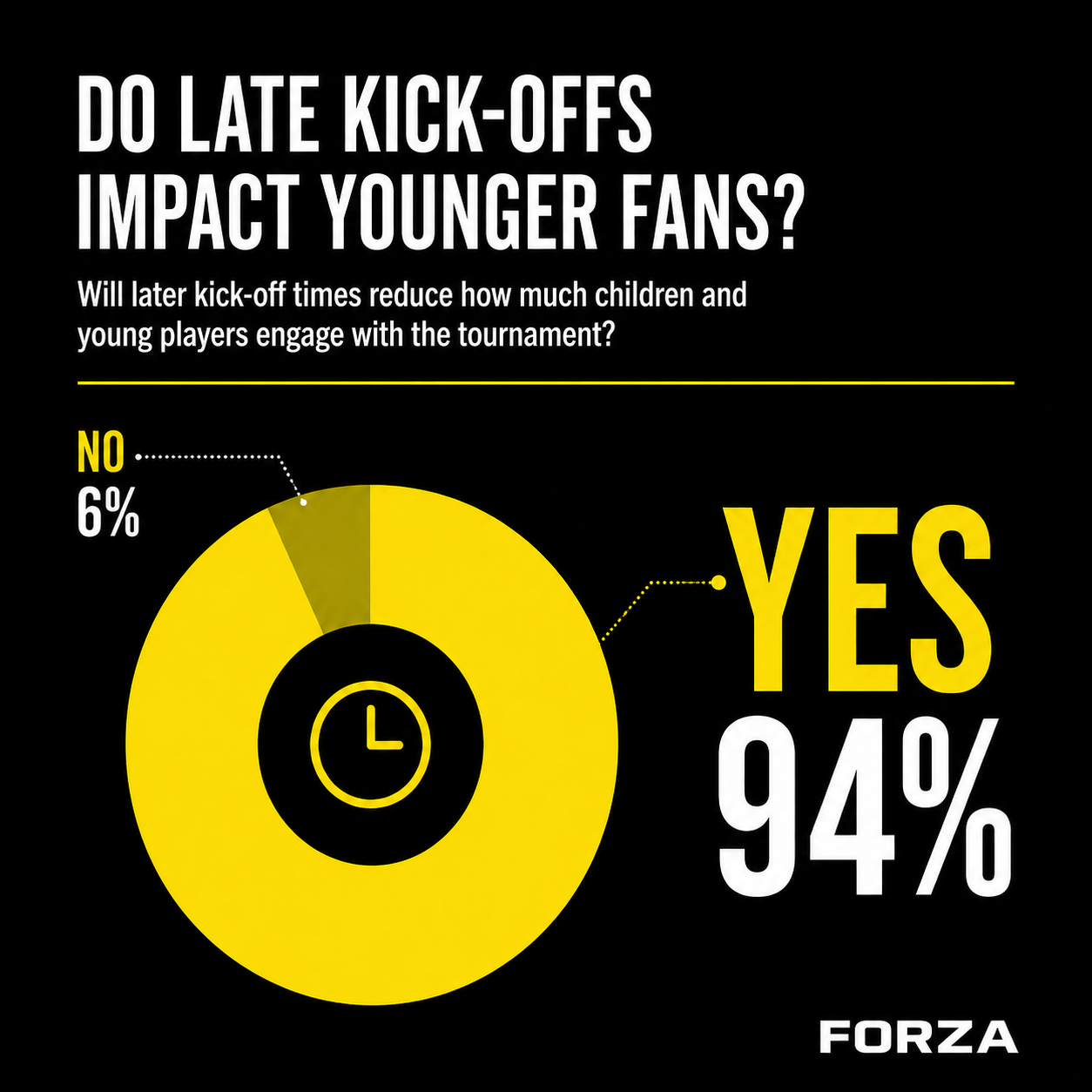
- 94% of grassroots respondents believe later kick-off times will reduce how much children and young players engage with the tournament.
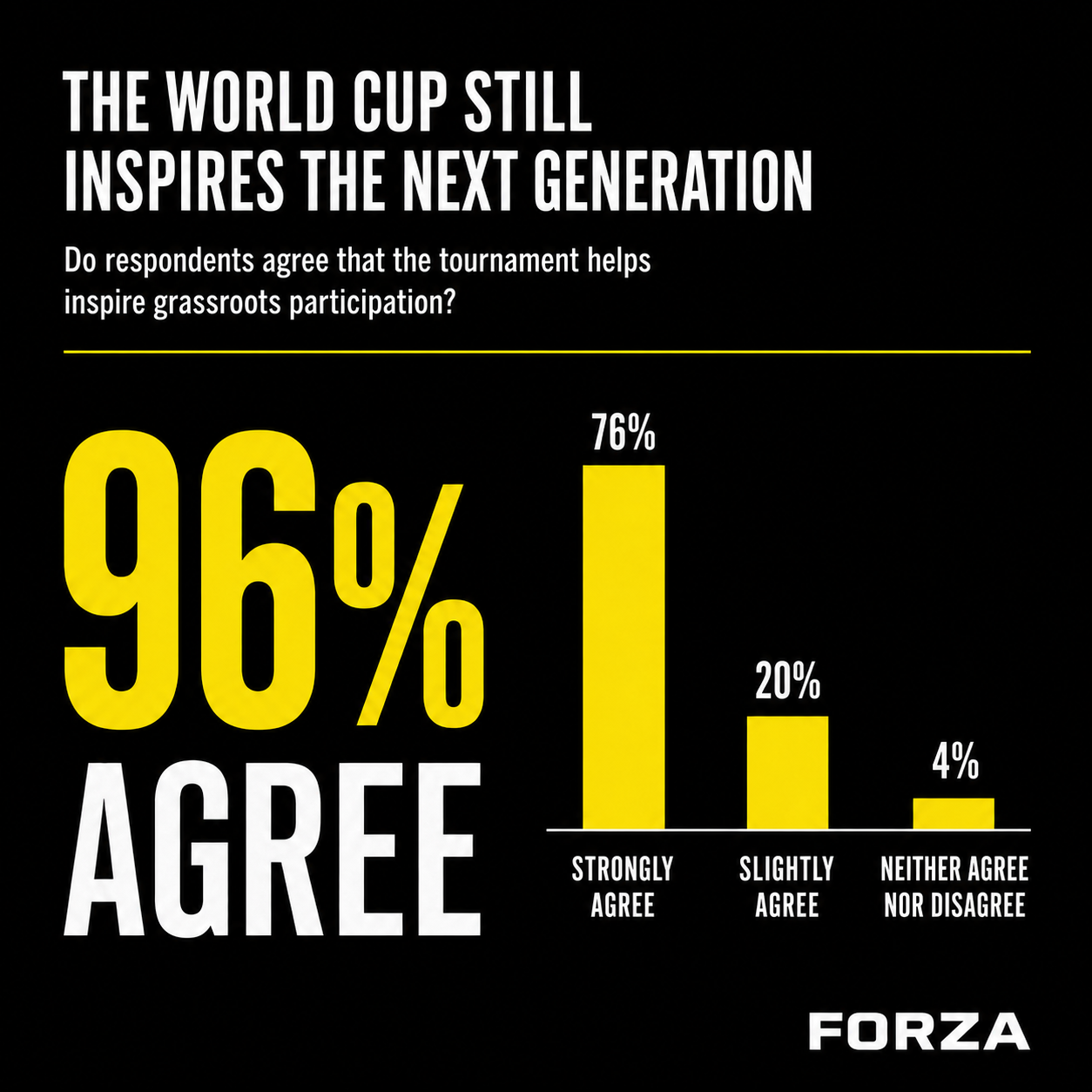
- 96% agree that major international tournaments play a key role in inspiring the next generation to take part in grassroots football.
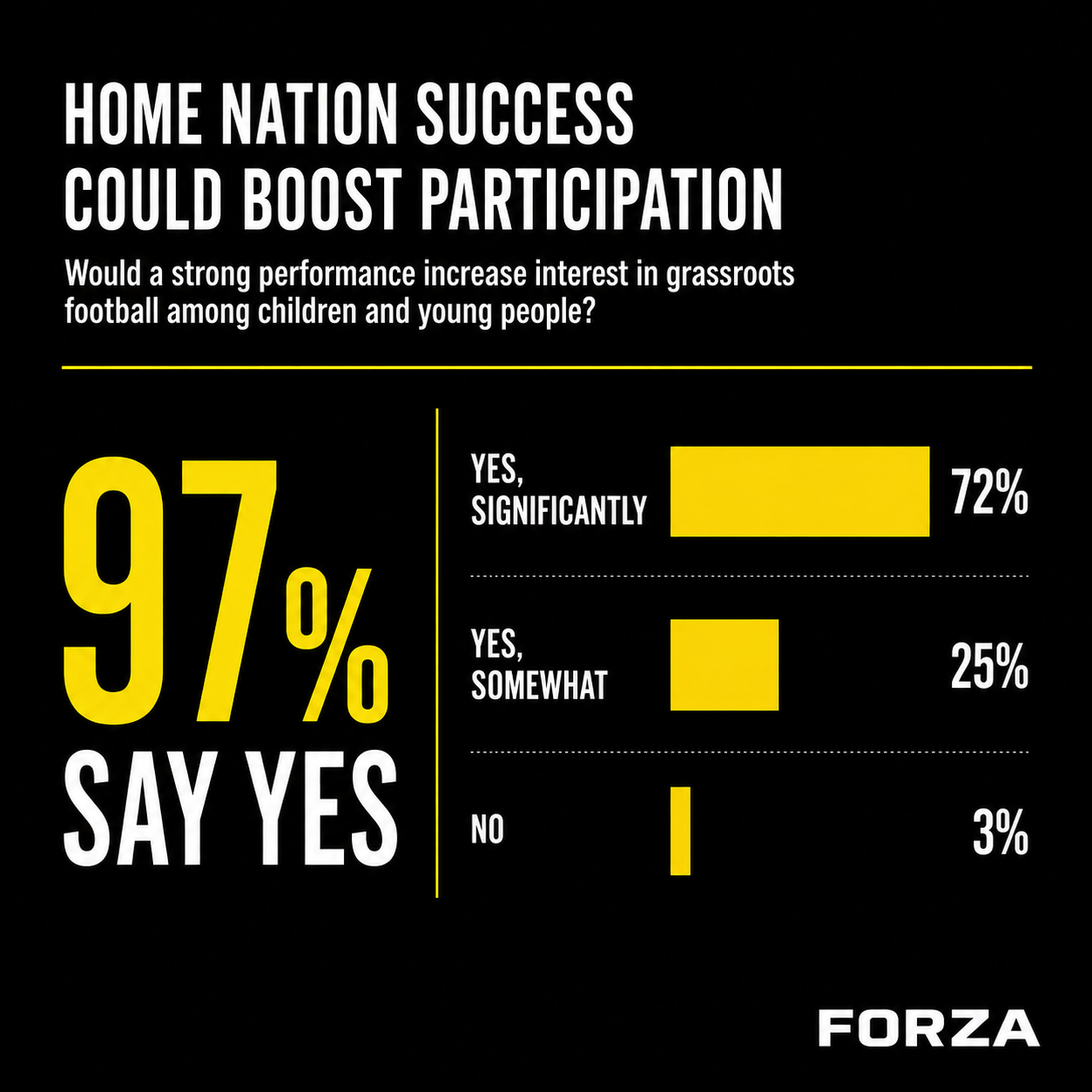
- 97% believe a strong home nation performance would increase grassroots participation among children and young people.
- 90% say major international tournaments usually have a positive impact on their local club or football community.
Memories of a first World Cup start young
One of the clearest findings from the survey is how young many grassroots football participants were when they first connected with the World Cup. Among respondents, the average age at which they first remember watching the tournament was 10 years old.
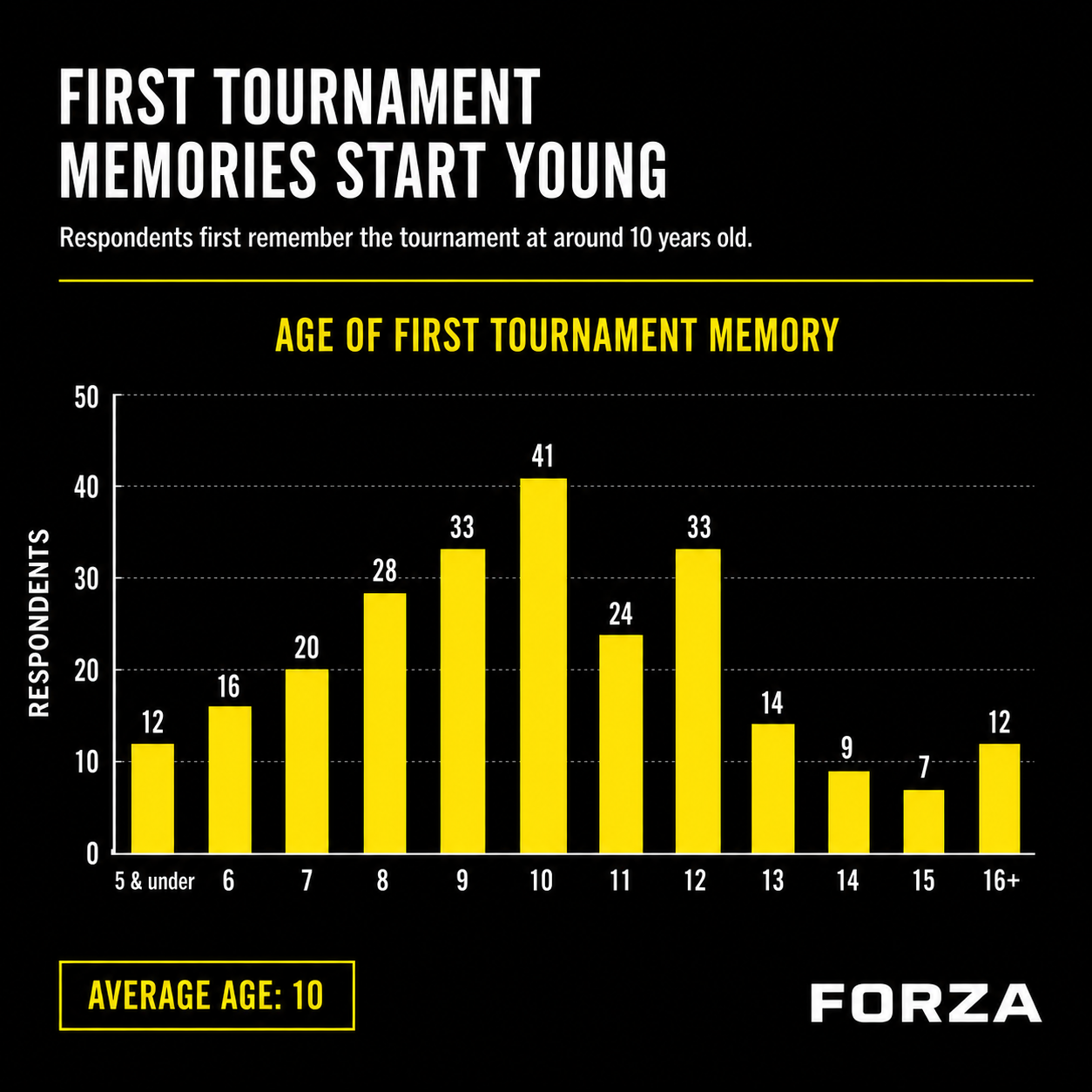
That means the football memories many adults still carry today were often shaped while they were still in primary school, and the emotional pull of the tournament is still strong today. 86% of respondents said they are excited for the 2026 World Cup, while 88% said they plan to watch as many matches as they can.

When we asked what made their first World Cup memorable, the answers paint a picture of what these tournaments mean to young fans:

The survey data shows that the biggest memory for most is watching with friends and family (40%), others include school and community buzz (28%), and home nation performance (22%). Most football fans also have memorable moments from wathcing the world cup, whether it be for a specific player (32%) or a famous match (22%).
Many respondents even recalled iconic moments from their first World Cup, from Gordon Banks’ save against Pelé in 1970 to Gary Lineker’s Golden Boot and the brilliance of Johan Cruyff’s Dutch Total Football. These memories are sentiments, which many hold dearly, and stand as some of the most inspirational moments in football.
But research suggests that moments like this may easily be missed this year.
Late kick off times could prevent younger generations from watching
The survey suggests that the 2026 World Cup may face a unique challenge in the UK, as many of its most memorable moments could happen while children are asleep.
When asked what made their first tournament memorable, the most common answer as mentioned earlier was watching with family and friends (40%). That shared experience is clearly really important for children aged around 10 years old.
When creating this survey, we realised that kick off times for the UK were much later due to the time difference in the US, Canada & Mexico. Where typically matches in the UK have 8pm as the latest kick off, games at the next World Cup are televised as late as 4am in the morning.
Compared with previous World Cups, the 2026 tournament is set to be far less accessible for UK audiences, especially younger viewers. When we analysed UK kick-off times for every World Cup dating back to Germany 2006, we found that earlier tournaments were heavily weighted towards afternoon and early evening slots, the kinds of timings that allow children to watch live, talk about the games with friends, and share key moments with their families.
The 2010 World Cup in South Africa was particularly viewer-friendly in the UK, with 55% of matches kicking off in the afternoon and 45% in the early evening. The 2018 World Cup in Russia followed a similar pattern, with 58% of games in the afternoon and 41% in the early evening. Even the 2022 World Cup in Qatar saw 89% of matches take place before 8pm UK time.
2026 World Cup kick-off times vs previous tournaments
A comparison of UK kick-off times across the last six World Cups, from Germany 2006 to USA/Canada/Mexico 2026.
% of games by UK kick-off time period · 2006–2026
2026: 104 matches · All previous tournaments: 64 matches · Percentages used to allow like-for-like comparison · All times UK BST

The 2026 World Cup, by contrast, has shifted towards later hours. Analysis of the fixture schedule shows that 43% of matches kick off between midnight and 5am UK time, while a further 44% begin between 8pm and 11pm. Taken together, that means 87% of matches are scheduled either late in the evening or overnight.
For younger viewers, that is a significant change. Earlier tournaments were more likely to provide live, shared experiences that fit around school nights and family routines. In 2026, many of those moments may happen outside the hours when children can realistically watch them live.
With this data we asked the question of whether later kick off times would reduce how much younger players and children engage with the tournament. Our survey found that 94% of respondents agree that it would.
This matters because 96% also agreed that the World Cup plays a vital role in inspiring the next generation to take part in grassroots football.
That creates a real risk that many children could miss the very moments that make the World Cup so memorable in the first place.
A strong home performance could boost grassroots participation
Clubs across the UK are hoping for their nations to bring the World Cup home. 97% of respondents agree that a strong home nation performance would increase grassroots participation among children and younger players. Looking at how well the Lionesses win over Spain in the Euro’s final boosted the women’s game, it seems that the Men’s World Cup this year is especially crucial for younger players.
When asked how beneficial the tournament is for grassroots football, respondents averaged a rating of 7 out of 10, signifying the importance of the World Cup. 9 in 10 clubs (90%) also said that major international tournaments usually have a positive impact on their local club or football community.
When asked how this affects their club, some of the popular answers included more children wanting to join (72%), more general excitement around football (74%) and more interest in girls’ football (45%).
More than half of clubs are planning activities around the tournament.
The World Cup is already shaping how many grassroots clubs plan to engage their players and communities this summer. 58% of respondents said their club is planning some form of activity around the 2026 World Cup.
Among those, the most popular activities are:
- 34.8% - Watch parties or social events (giving younger fans a chance to experience games together, even if they can't stay up at home)
- 30.8% - Training sessions themed around the tournament
- 19.6% - Fundraising or community events
- 17.4% - Youth engagement sessions
- 13% - Social media content
While not every club is planning dedicated activity, the findings suggest that many see the tournament as more than just something to watch, they see it as an opportunity to build community, inspire players and generate fresh excitement around football. However, with matches facing
Concluding thoughts
The data points to a clear tension at the heart of the 2026 World Cup for grassroots football. The tournament still plays a crucial role in inspiring players, boosting participation and creating excitement in local communities. But if many of its biggest moments happen too late for children to experience live, its power to create the next generation’s first football memories may be reduced.
For grassroots clubs, this is important. The average respondent first remembers the tournament at around 10 years old, exactly the kind of age when footballing dreams often begin.
Methodology:
FORZA surveyed 250 people involved in grassroots football clubs across the UK. Average age of first tournament memory was calculated using respondents who provided answers for both year of birth and the first World Cup they remember watching.
Follow us on social media for more updates and reports: